
The education system teaches people the knowledge they need in their lives. The question is, do we need everything we are taught? No, we need just a part of it. Schools have always been under the control of authorities and have followed their interests, not those of the people. As a result, we are subjected to an overwhelming amount of knowledge imposed on us by authorities, which secures their positions in society. Most of the knowledge we are taught is false or not accurate enough, and, above all, useless. The essential function of education today is not acquiring knowledge but learning obedience to authorities.
Students must accept incorrect or insufficient knowledge if they want to obtain a work permit. That is how generations have acquired useless knowledge. Such knowledge impedes students' thinking, alienates them from reality, and inhibits the development of society. Schools are factories for producing social powerlessness. We must eliminate the false notion that the education system provides. Furthermore, the authorities prevent the introduction of any knowledge to schools that might undermine their power in society. Such knowledge may improve society, and we need to teach it.
Natural sciences create knowledge about the physical world. They serve today's elite well, so they are allowed to develop as freely as possible. The natural sciences are beneficial to society as a whole, so they are more developed than the social sciences.
Social sciences exist to analyze and improve human society. However, the social sciences cannot improve society because they require taking power from the elite, and the elite do not allow it. As a result, social scientists have built misdeveloped political, economic, and other sciences that benefit the elite and cannot improve society. Our culture is based on the power of authorities. Under the pressure of the elite, the social sciences have never accurately determined the nature of society. Social science has failed to answer the fundamental question: What constitutes a good and bad society? The answer to this question is not only crucial for the development of society, but it is also simple.
Equal human rights are the answer to all social problems. Equal human rights have never existed in the history of humankind, and this is the only reason societies have never been good. Social scientists understand the formal need for equal human rights as presented in the UN Declaration of Human Rights. But this declaration is entirely non-binding. The elite prevent anything beyond that, and as a result, social scientists do not understand the full scope of the need for equal human rights. The lack of equal human rights prevents the progress of politics, economics, and humankind. By ignoring equal human rights, social scientists ignore the only chance of establishing a bright future for humanity.
Equal human rights mean that whatever is allowed to one person in society must be allowed to everybody else, and vice versa; what is forbidden to one person must be forbidden to everybody else. Once society understands it, people will demand equal human rights, thereby taking power from authorities. Once equal human rights are established, society will become unavoidably good. I have defined equal human rights in the one-page article Equal Human Rights Will Build a Good Society Unconditionally.
Political science studies systems of government. It has established liberal democracy as the pinnacle of its development. Liberal democracy enables people to elect politicians who are supposed to represent their interests. However, in reality, liberal democracy often prioritizes the best interests of the elite over those of the people. Politicians need money to be elected, and they can obtain it primarily from the elite. By accepting money from the elite, politicians must serve the elite's interests. The elite use politicians to oppress and exploit people the same way dictators did. Such democracy is, in reality, a hidden dictatorship.
There is an escape from the problems of democracy; we can hardly see because the elite has deceived us. Throughout history, the golden rule: "Do unto others as you would have them do unto you," has sometimes established similar social environments as equal human rights would. So far, it had been a moral principle based on the consciousness of people; some followed it, and some did not. Those who accepted it contributed to the betterment of society. However, most of the people, most of the time, did not follow the golden rule. As a result, society was predominantly evil throughout history. We can create a good society by enforcing the golden rule. It is possible by empowering the people through the acceptance of equal human rights.
We can do it very simply. Let's give everyone the right to evaluate five people, positively or negatively, every month for their actions. Let a positive evaluation bring a small award to the assessed person, and a negative assessment bring a small punishment. Then everyone will work hard to improve others' lives and not harm them. This simple measure will fix social problems. It will create what the social sciences have never been able to do - a good society. I have referred to such political reform as "democratic anarchy" and presented it at length in the article "Democratic Anarchy is the Future of Democracy."
My experience in spreading this idea suggests that people have difficulties accepting democratic anarchy due to the alienation stemming from authoritative education. This prevents the progress of society. Once equal human rights are accepted by society, society will improve significantly. As society develops, democratic anarchy might make laws obsolete.
Economic sciences study the production, distribution, and consumption of goods and services. They will also be strongly affected by equal human rights, and this will bring about vast improvements to the economy.
Firstly, equal human rights would entail the right to work and earn a living for all individuals. It is a fundamental human right. Full employment will be achieved by reducing the working hours of all employed individuals until unemployment is eliminated. Then, economic development will increase demand for workers. Employers will compete with each other to attract workers, which would lead to higher worker salaries. This will bring justice to the economy. Politics may contribute to underemployment by further reducing work hours, thereby increasing the demand for workers and their wages. People will be able to spend more, which will grow the economy and benefit all. I wrote more about it in the article Full Employment is a Turning Point of Capitalism.
The future economy will necessarily develop the labour market. The establishment of equal human rights will create a competitive environment among workers for every public work post at any time. It will be possible by building a much more efficient form of work responsibility than capitalism can provide. I have outlined the future of the economy in the book Humanism, available for free. It will be simple and effective.
Implementing such an economy is just a technical problem. However, it will require numerous public discussions and further developments before people understand it sufficiently and become willing to accept it. No economy can be more productive than one in which the best available worker fills each job. In the future, capitalism will be unable to compete with this type of labour market, and it will go down in history. Then a much better future of humankind will begin.
***
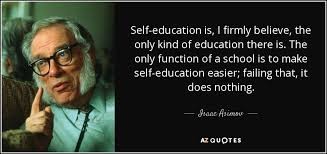
In the future, bureaucratic educational requirements for jobs may become unnecessary. Education will not be obligatory for obtaining jobs because the new system will impose such a great responsibility on workers that they would not dare to compete for work for which they are not qualified. Let students decide what knowledge they need to do the job they want, and that will tell us which sciences are necessary. I wrote more about the future of education in the article 'My Clash with Science.'